Cody Collett is descended from generations of proud but impoverished ancestors whose undervalued struggles to survive nevertheless enhanced the lives of those within their communities and beyond. They picked fruit, street-peddled cloth, dug graves, swept streets, cleaned houses, painted and hung wallpaper, worked in laundries and, in wartime, as frontline soldiers. Collett was taken from her home, without explanation, when she was six years old and placed in a children's home run by Roman Catholic nuns. At 16, she began making her own way in the world—living mostly in low-rent rooming houses and YWCAs while working as a department store candy girl, maid, cashier, door-to-door salesperson, and doing blood laboratory clean-up to support herself, including through the last year of high school and, after a singular turn of events, college.
Cody Collett is descended from generations of proud but impoverished ancestors whose undervalued struggles to survive nevertheless enhanced the lives of those within their communities and beyond. They picked fruit, street-peddled cloth, dug graves, swept streets, cleaned houses, painted and hung wallpaper, worked in laundries and, in wartime, as frontline soldiers. Collett was taken from her home, without explanation, when she was six years old and placed in a children's home run by Roman Catholic nuns. At 16, she began making her own way in the world—living mostly in low-rent rooming houses and YWCAs while working as a department store candy girl, maid, cashier, door-to-door salesperson, and doing blood laboratory clean-up to support herself, including through the last year of high school and, after a singular turn of events, college.
Years later, sample pages of her early experiences resulted in numerous admissions to New York State Writers Institute juried writing workshops at the University at Albany. A residency fellowship from the Edna St. Vincent Millay Colony followed, as did invitations that included readings at Rensselaer Polytechnic Institute’s WRPI radio and the Hudson Opera House. It was during a NYSWI master workshop that the writer roughed out an initial structure for what would eventually become her memoir. Soon after, she received an institute fellowship to Lugano, Switzerland. Collett, who works reclusively, since then has been broadening her body of literary work into a memoir trilogy, several companion pieces, as well as non-fiction projects that are also compelled by the writer's continued commitment to equity and social justice. Volume 1 of the memoir series, things that could be something, is now complete. Excerpts have earned juried workshop retreat invitations from the Delaware Division of the Arts.
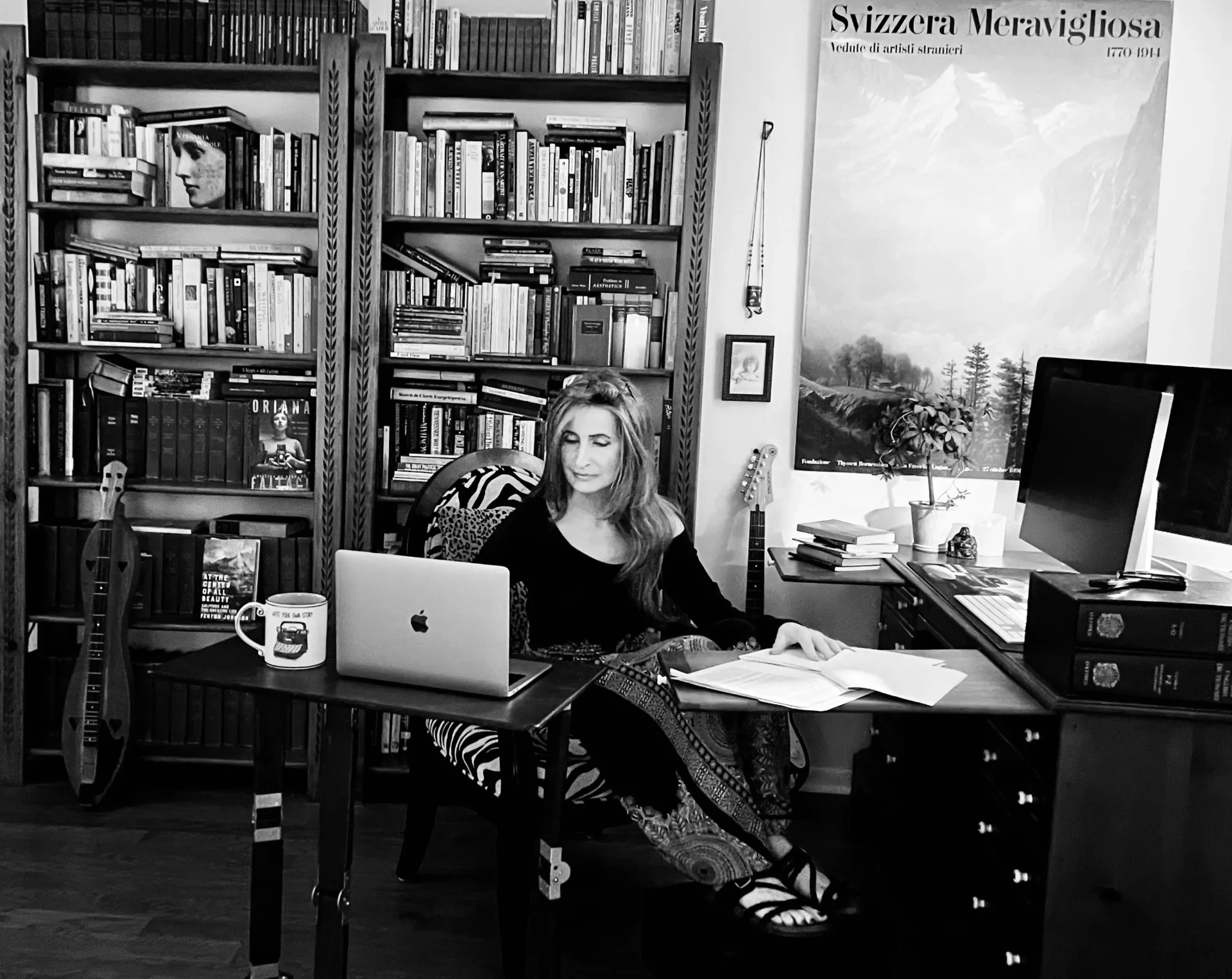
“It was necessitated, originally, by my fierce alignment with the millions of my country’s marginalized populations struggling, in one way or another, for self-determination, peace; for a way for some part of themselves to survive,” Collett says of her work, which has been decades in development and is nonconventional in vision and approach. This lifelong alignment has been evidenced in Collett’s other work life, too, including: at Skidmore College, with the former Head Start Supplementary Training that provided one-on-one guidance through career-ladder education for Head Start community staff; tutoring with the English as a Second Language program for Department of Defense spouses in Germany; conference center assistance and outreach in support of the work of the Religious Society of Friends—Quakers; in the Alaskan interior, as an Information Specialist with VISTA (the domestic Peace Corps), expanding access to economic, social, educational and health resources to challenged residents including non-Indian, Indian and Native Alaskan children, adults and elders.
A first generation college graduate, the writer has a broad liberal arts education. During her five-year stay in Alaska, further studies at the University of Alaska at Fairbanks were concentrated in Philosophy and Journalism. She was the Journalism Department’s magazine articles editor there. Also, while still a student, her first professional writing effort became a multi-page feature in the iconic All-Alaska Weekly. As a freelance journalist, publication of stories and photographs in magazine and newspaper media continued. When living in Europe, in addition, Cody Collett was a commentary columnist for the Stars and Stripes/Europe & Pacific.
Currently, the writer lives in Delaware where she is further crafting her second volume of memoir. Tentatively titled Easy Prey in Winter, its completion is scheduled for 2027.
Years later, sample pages of her early experiences resulted in numerous admissions to New York State Writers Institute juried writing workshops at the University at Albany. A residency fellowship from the Edna St. Vincent Millay Colony followed, as did invitations that included readings at Rensselaer Polytechnic Institute’s WRPI radio and the Hudson Opera House. It was during a NYSWI master workshop that the writer roughed out an initial structure for what would eventually become her memoir. Soon after, she received an institute fellowship to Lugano, Switzerland. Collett, who works reclusively, since then has been broadening her body of literary work into a memoir trilogy, several companion pieces, as well as non-fiction projects that are also compelled by the writer's continued commitment to equity and social justice. Volume 1 of the memoir series, things that could be something, is now complete. Excerpts have earned juried workshop retreat invitations from the Delaware Division of the Arts.
“It was necessitated by my fierce alignment with the millions of my country’s marginalized populations struggling, in one way or another, for self-determination, peace; for a way for some part of themselves to survive,” Collett says of her work, which has been decades in development and is nonconventional in vision and approach. This lifelong alignment has been evidenced in Collett’s earlier work life, too, including: at Skidmore College, with the former Head Start Supplementary Training that provided one-on-one guidance through career-ladder education for Head Start community staff; tutoring with the English as a Second Language program for Department of Defense spouses in Germany; conference center assistance and outreach in support of the work of the Religious Society of Friends—Quakers; in the Alaskan interior, as an Information Specialist with VISTA (the domestic Peace Corps), expanding access to economic, social, educational and health resources to challenged residents including non-Indian, Indian and Native Alaskan children, adults and elders.
A first generation college graduate, the writer has a broad liberal arts education. During her five-year stay in Alaska, further studies at the University of Alaska at Fairbanks were concentrated in Philosophy and Journalism. She was the Journalism Department’s magazine articles editor there. Also, while still a student, her first professional writing effort became a multi-page feature in the iconic All-Alaska Weekly. As a freelance journalist, publication of stories and photographs in magazine and newspaper media continued. When living in Europe, in addition, Cody Collett was a commentary columnist for the Stars and Stripes/Europe & Pacific.
Currently, the writer lives in Delaware where she is further crafting her second volume of memoir. Tentatively titled Easy Prey in Winter, its completion is scheduled for 2027.